
Conway, AR · Garage Door Service
What Your Conway Garage Door Is Up Against
Most Conway, AR garage doors sit on houses built between 1972 and 2003, facing cold winters that original hardware, springs, and panels weren't built for.
- Repairs & new doors
- Springs & openers
- Serving 4 nearby communities
What Is Going On
Most of the garage doors we look at in Conway sit on houses built between 1972 and 2003, with the midpoint of that stretch landing around 1994. That's not a small window - it covers three different eras of garage door hardware, spring style, and insulation code. The bulk of what we see, though, clusters in the 1980s and 90s, spread across a dozen distinct pockets of town rather than one subdivision.
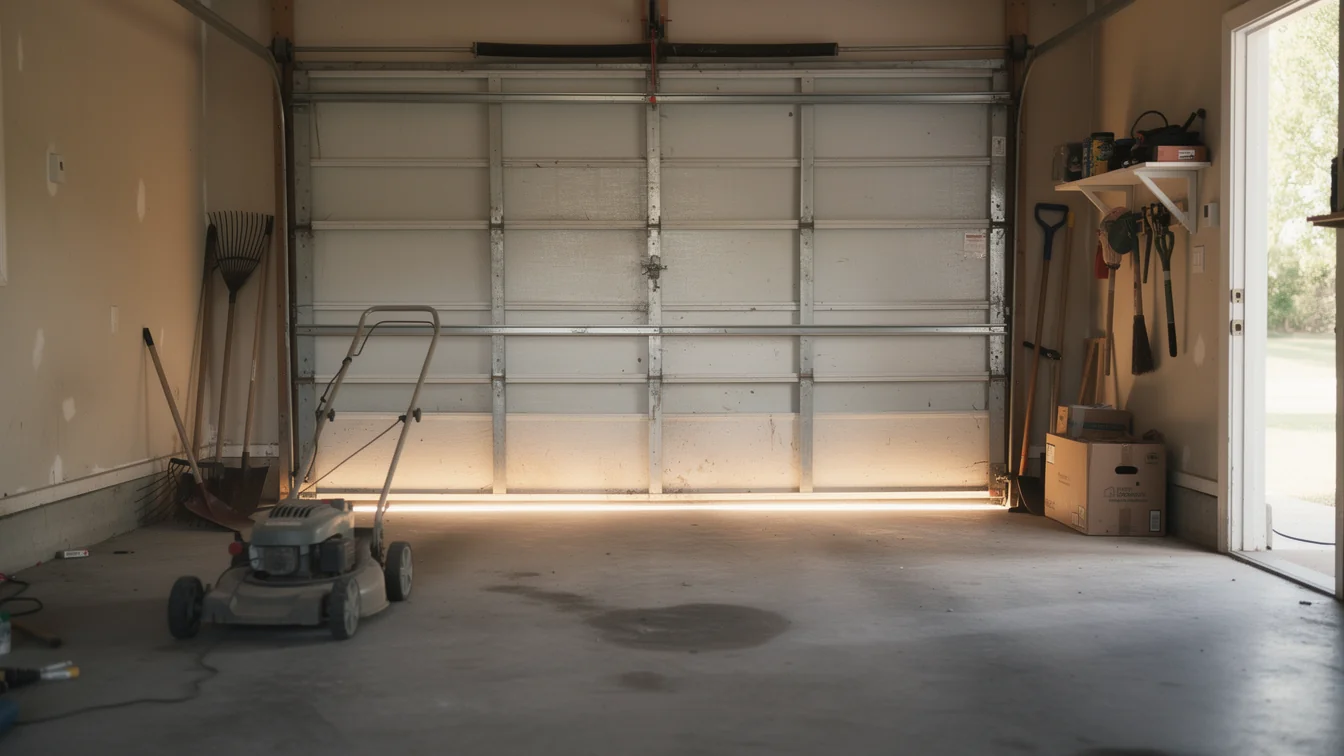
What that means in practice: a lot of doors out there are original equipment. Nobody's touched the torsion spring, the hinges, or the weatherstripping since the builder hung the door. On a house from that era, you're often looking at doors on houses built before insulation rules tightened up later - thin panels, minimal or no foam core, and steel skins that were never meant to hold heat in.
That's not automatically a problem. Plenty of these doors still run fine. But the parts wear the same way across the board - springs lose tension, rollers wear grooves, and the steel panels that never had insulation behind them flex more than newer doors do. The age of the stock is the starting point for almost every call we take.
When to Get Help
Call before the door stops working, not after. A spring on a door from the 1980s or 90s has had three or four decades to fatigue, and when it goes, it usually goes without much warning - a loud bang, then a door that won't lift past a few inches, or one that slams down on its own. That's not a DIY fix. Torsion springs are under enough tension to break a bone or worse, and we don't recommend homeowners touch them.
Short of a full break, watch for a door that's gotten noticeably louder, one side that drops faster than the other, or an opener that strains and reverses partway through a cycle. Those are early signs the spring or cables are near the end, not the opener itself.
One honest limit here: if a door is original to a house built in the early 1970s, repair sometimes costs more over a year or two than replacing the door and opener outright, especially once you're sourcing obsolete track hardware. We'll tell you straight when that's the math, rather than patch something that's going to need patching again in six months.
What to Check
Start with the spring. Stand the door up (manually, with the opener disconnected) and see if it holds position halfway open. If it drops, the spring's lost tension - common on anything original to a house from the 70s through the 90s that's never had a spring replacement.
Next, look at the panels themselves, especially if the door is original. Doors on houses built before insulation rules tightened up often have single-layer steel skins with no foam backing - press on a panel and if it flexes a lot or feels cold to the touch on a winter day, that's the uninsulated steel, not a defect, just the era it came from.
Check the rollers and track for play - side to side wobble in the track usually means worn rollers, and on a 30-to-40-year-old door those are almost always the original steel rollers, not nylon.
Last, check the bottom seal. On older doors it's often brittle or cracked, letting in a draft you can feel standing in the garage on a cold morning. That's a cheap fix and worth doing before you spend money on anything bigger.
What Local Conditions Do
Conway falls in a cold-moderate climate band, which means winters here put real freeze-thaw cycles into the ground and into anything metal sitting in an unheated garage. That matters more on older doors because the steel track and hardware weren't built with today's cold-rated lubricants or seals in mind - grease that's fine in summer can stiffen up and slow the door's swing in January.
With roughly 18,892 households and 11,832 owner-occupied houses across the area, the sheer number of original-era doors still in service means we see the same failure points again and again: torsion springs that have outlived their rated cycles, bottom seals gone brittle from repeated cold snaps, and openers straining against doors that have gotten heavier with age as panels sag.
At a median household income of $61,357, we also know most homeowners aren't looking to replace a whole system on a whim. That's part of why we check the spring, track, and seal separately before talking about a full door - sometimes the fix really is one part, not the whole unit, and we'd rather tell you that than not.
Frequently asked questions
My garage door is original to a house built in the 1980s - is that a problem?
Not automatically. A lot of doors from that era are still structurally sound. The parts that wear out first are the torsion spring and the rollers, both of which have a limited cycle life regardless of how well the door was built. If those have never been replaced, that's where we'd look first.
Why does my door feel stiffer in winter?
Conway sits in a cold-moderate climate band, and older grease and seals stiffen up in cold temperatures. On a door with original hardware, that stiffness is more noticeable because the lubricant and weatherstripping were never upgraded to anything cold-rated.
Should I replace the whole door or just fix the spring?
Depends on the door. If the panels are sound and it's just the spring or rollers, a repair makes sense. If the door is original to an early-1970s house and several systems are failing at once, replacement often costs less over time than repeated repairs.
Related garage door services in Conway
More garage door guides
Book garage door service in Conway
Call now or request a quote - tell us what the door is doing and where you are.