
Conway, AR · Garage Door Service
What an Older Garage Door Is Worth Fixing in Conway
Most Conway, AR homes were built between 1972 and 2003, so garage door age and spring hardware vary a lot. Here's what decides if a repair still makes sense.
- Repairs & new doors
- Springs & openers
- Serving 4 nearby communities
What Is Going On
Most of the housing around Conway went up between 1972 and 2003, with the median landing close to 1994. That matters more than people think, because garage doors and their hardware got built to different standards decade by decade. A door installed when a house was new in the early 90s is usually a single steel skin with a torsion spring sized for the lighter sections common back then. Later doors, even on the same street, might carry a different spring weight or a different track profile. When we show up to a call, the first thing we're doing is figuring out which era of door and hardware we're actually looking at, because that decides whether a $40 part fixes it or the whole unit needs to come out. A lot of the stock across the service area falls into that 1980s-to-90s window, which means original hardware is common, and original hardware is also the hardware nobody stocks on the truck anymore. That's not a knock on the doors - steel holds up fine. It's the springs, cables, and rollers that wear out on a schedule, regardless of how good the door itself still looks.
When to Get Help
Call before the door comes off the track, not after. A torsion spring that's visibly separated, a cable that's frayed at the drum, or a door that slams the last foot instead of settling - those are jobs for a tech, not a Saturday project, because a wound spring under tension can do real damage if it lets go wrong. If the door is from that 1972-to-2003 build window and the opener is straining, grinding, or reversing on its own, that's usually hardware fatigue catching up with age rather than an opener problem. With 11,832 owner-occupied houses across the area we cover, and a median household income of $61,357, we hear a lot of people trying to decide whether a repair is worth it before they call. Honestly, if the panels are solid and it's just springs, cables, or rollers, it almost always is. We also take calls from homeowners out toward Mayflower, Wooster, Bigelow, and the other towns in our service area - age and wear patterns are consistent with what we see closer in.
What to Check
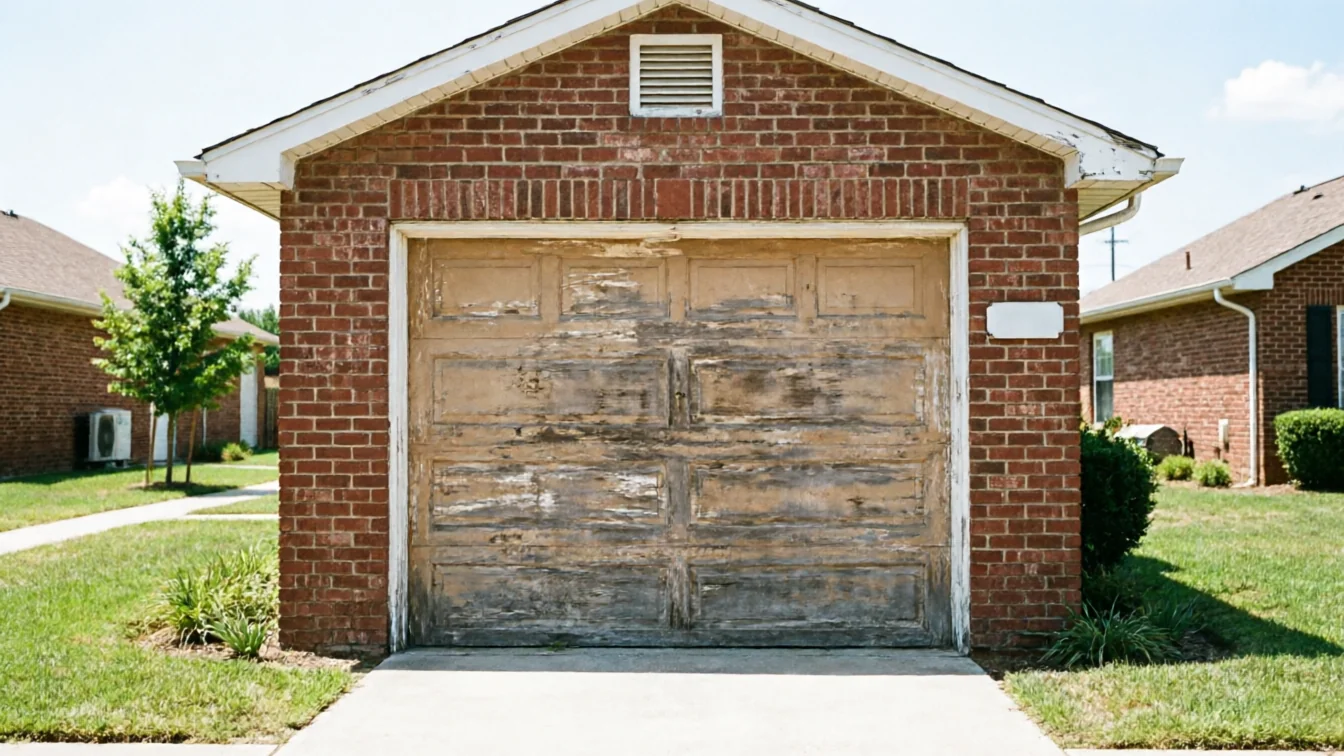
Start at the bottom panel. Rust along the bottom edge, especially where it meets the weatherstrip, is common on doors from the 80s and 90s that never got a waterproof threshold. Next, look at the spring itself - if you can see a gap in the coil, stop, don't touch the door, and call. Check the rollers where they sit in the track; pitted or flat-spotted rollers on an original door usually mean 20-plus years of use, which tracks with the 1994 median build year for this area. Listen for the cables - if one side sounds different from the other when the door runs, a cable is likely stretched or fraying. Last, check the bottom seal for cracking or stiffness, since a seal that's lost its flexibility stops doing its job well before it looks obviously bad. None of this requires tools beyond a flashlight. What it does require is doing it before the part fails mid-cycle, because a door that drops unevenly on one side is a hazard, not just an inconvenience.
What Local Conditions Do
Conway sits in a cold-moderate climate band, which means winters bring enough freeze-thaw cycling to matter for steel and for the lubricants in the hardware. A torsion spring that's fine in August can bind up or snap in a cold snap if it was already fatigued, because cold steel is less forgiving under tension. Uninsulated doors from the 1972-2003 building window also flex more with temperature swings than newer insulated sections do, and over enough winters that flexing works screws loose and opens gaps at the panel seams. Moisture is the other piece - condensation on an uninsulated steel door in a cold-moderate climate runs down to the bottom panel, which is exactly where we see the rust start on older stock. None of this means an older door is doomed. It means the maintenance schedule should lean a little harder on lubrication before winter and a look at the bottom panel each fall, rather than waiting for a problem to show up on its own.
Frequently asked questions
Is it worth fixing a garage door from the 1990s instead of replacing it?
Usually, yes, if the panels and frame are solid. Springs, cables, and rollers are wear parts on any era of door, and swapping them out on a sound 1990s steel door costs a fraction of a full replacement. Replacement starts to make more sense when the panels themselves are rusted through or the track is bent, not just when the hardware is old.
Why do garage doors in Conway seem to fail more in winter?
Conway's cold-moderate climate means steel hardware and lubricants work harder in freezing temperatures. A spring that's already fatigued is more likely to let go in cold weather than in summer, and condensation on uninsulated doors adds moisture that speeds up rust on older bottom panels.
How do I know if my garage door hardware is original?
If your house was built in the window common across this area, roughly 1972 to 2003, and the door has never been replaced, the spring, rollers, and cables are likely original too. Pitted rollers, a spring without a visible stretch gap, and a worn bottom seal are all signs you're still running the factory hardware.
Do you work outside Conway itself?
We take calls across the surrounding area, including towns like Mayflower, Wooster, Bigelow, Plumerville, Greenbrier, and Vilonia. Housing age and wear patterns out there are similar to what we see closer in, so the same repair-versus-replace logic applies.
Related garage door services in Conway
More garage door guides
Book garage door service in Conway
Call now or request a quote - tell us what the door is doing and where you are.