Conway, AR · Garage Door Service
What We Actually Do on a Conway Service Call
A look at what we actually check on a Conway service call, tied to the 1972-2003 housing stock and cold-moderate winters that shape wear on doors across the area.
- Repairs & new doors
- Springs & openers
- Serving 4 nearby communities
What Is Going On
Most of the houses we get called to in Conway went up somewhere between 1972 and 2003, with the bulk of that stock dating to the 1980s and 90s across the twelve areas we cover. That matters more than people think. A door from that era is old enough that the original springs, if they're still on there, are past any reasonable lifespan, but the house isn't old enough to have the oddball sizes or hand-built jambs you find on pre-1970 construction. What we're usually looking at is a standard torsion or extension setup that's simply worn out from age and use, plus whatever the opener's electronics have done over fifteen or twenty years of cold winters cycling the metal. A service call starts with figuring out which of those two things - the mechanical hardware or the opener - is actually the problem, because homeowners often assume it's one when it's the other.
When to Get Help
Call before the door won't open at all. A spring on a garage built in the 80s or 90s is operating at the tail end of its rated cycle count by now, and when it lets go it usually does so without much warning - a loud bang, then the door won't lift or drops fast on the way down. If you hear new noise, see a stretched or kinked cable, or notice the door hanging unevenly, that's the window to get it looked at while it's still a repair and not an emergency. We also get calls where the opener runs but the door barely moves - that's almost always the spring doing none of the lifting work anymore, and running the opener motor against a dead spring for even a few more cycles can strip the gears.
What to Check
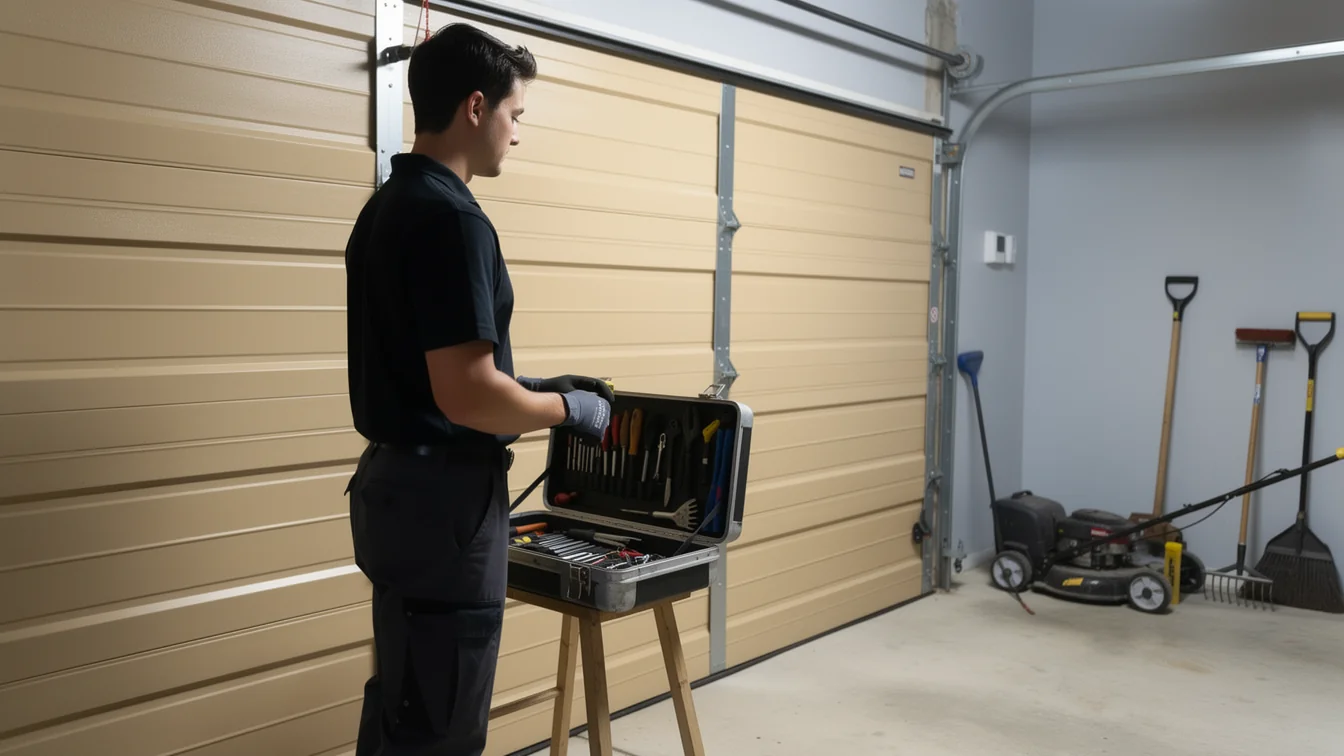
On a service call we check the springs for wear and correct sizing, since doors matched to 1980s and 90s-era tracks sometimes have replacement springs that were never sized right for the door weight. We check the cables and drums, the rollers (these dry out and crack from the cold-moderate swings this area gets), the track alignment, and the opener's force settings and safety reversal. We also check the weatherstripping at the bottom panel, which on a 20-to-40-year-old door is usually cracked or compressed flat. None of this requires guesswork - it's a checklist, and we go through it the same way whether the call came in as
Frequently asked questions
Why does my spring keep breaking even after a replacement?
If a spring was sized for a lighter door than what's actually installed - common on older Conway homes that have had a panel or insulation upgrade since the 1980s or 90s build date - it will wear out faster than it should. On a service call we check the spring rating against the actual door weight, not just swap the same size back in.
Does the cold affect my garage door here?
Conway sits in a cold-moderate climate band, which means winter temperature swings are real but not extreme. That's still enough to stiffen grease in rollers and hinges and make metal contract, which is why doors often feel noisier or heavier to lift in the coldest stretch of the year even with nothing actually broken.
Is a service call going to tell me I need a whole new door?
Sometimes, but not often. Most of the houses we see are from the 1972-2003 build window, and the hardware on those is standard enough to repair rather than replace. We'll tell you straight if a repair isn't worth it against a new door, but that's the exception, not the default recommendation.
Related garage door services in Conway
More garage door guides
Book garage door service in Conway
Call now or request a quote - tell us what the door is doing and where you are.