Conway, AR · Garage Door Service
When the Power Outages Out and Your Opener Won't Budge
Power outages hit older Conway openers hard. See why homes built 1972-2003 struggle, what to check first, and when a dead opener means more than a flipped breaker.
- Repairs & new doors
- Springs & openers
- Serving 4 nearby communities
What Is Going On
Most houses on this side of Conway went up between 1972 and 2003, with the bulk of that stock dating to the 1980s and 90s across the twelve areas we run calls in. Openers from that era, and a lot of the replacement units installed since without an upgrade conversation, don't have battery backup built in. When the power outages, the opener just stops. No chain movement, no light, no soft click from the logic board. That's not a broken opener. That's an opener doing exactly what it was built to do, which is nothing, until grid power comes back.
The confusion we hear most is homeowners assuming the unit itself failed because the remote stopped working at the same moment the lights went out. Check the breaker panel first. If the whole circuit is dead, the opener is innocent. If everything else in the house has power and the opener still won't respond, that's a different problem and worth a call.
We can't tell you how often your particular block loses power - we don't have outage data for Conway, and we won't guess. What we can tell you is that a unit built before battery backup was standard has zero fallback when it happens, and that describes a lot of openers still running in this area.
When to Get Help
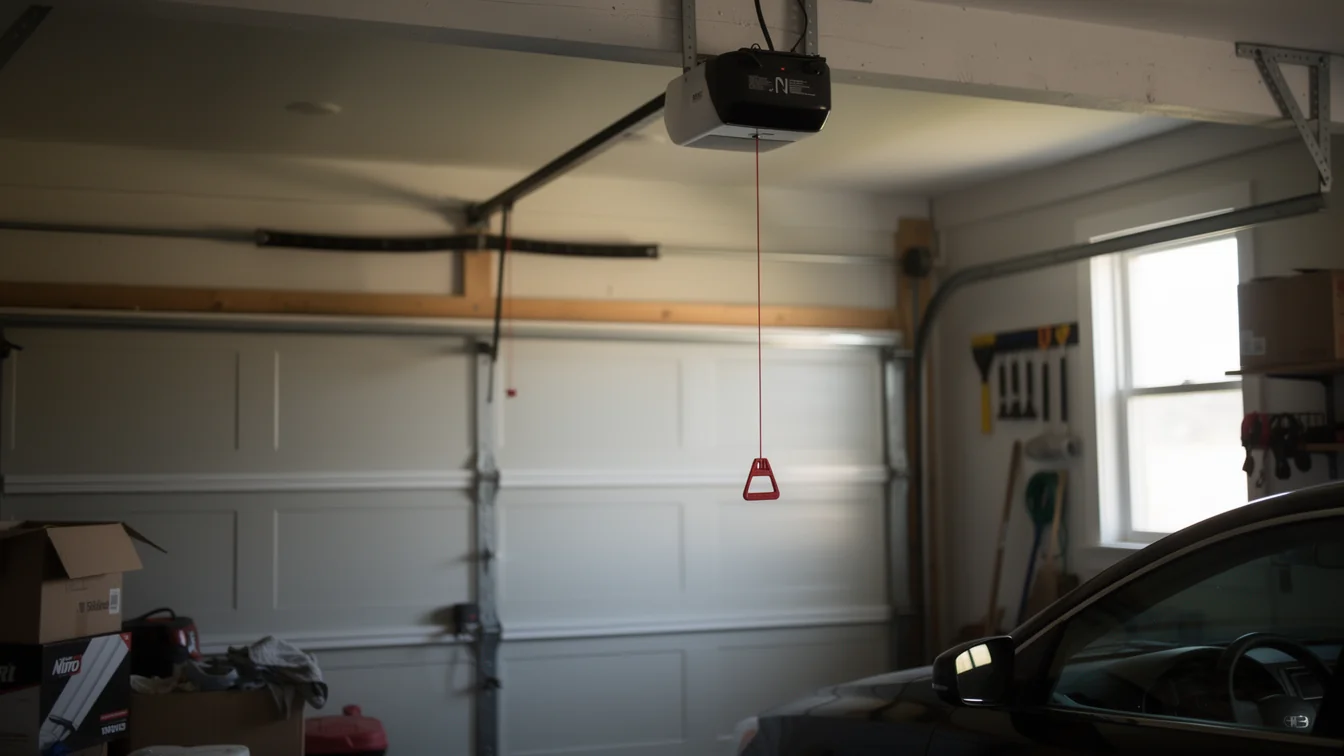
Call if the opener has power at the outlet but won't take a command from the wall button or remote - that points to the logic board or the motor, not the grid. Call if you hear the motor hum but the trolley doesn't move, especially on a door that's been fine for years; that's often a stripped gear inside the unit, not anything electrical at all. Call if you've manually released the door using the red cord during an outage and now it won't re-engage with the opener once power is back - the carriage can come off track and that's not a DIY reseat on most residential units.
Don't call us for a breaker trip. Reset it yourself first. If it trips again immediately, that's an electrician's job before it's ours - we work on the door and opener, not your home's wiring.
One honest limit: we don't stock battery backup kits for every opener brand and age combination. Older units, especially anything installed before the mid-2000s, sometimes can't take a backup retrofit at all because the control board wasn't built for it. If that's your situation, replacement is usually the straighter path than trying to force an old board to do something it wasn't designed for.
What to Check
Before you call anyone, check three things. First, the breaker - garage circuits sometimes share a line with an outdoor outlet or a sump pump, and either one tripping will take the opener down with it. Second, the manual release cord - if someone already pulled it during an outage to get the car out, the door is now running on the torsion spring alone with no opener engagement, and that's fine short-term but the door needs to be reconnected to the carriage correctly, not just pushed back up and left.
Third, if your opener does have a battery backup light, check whether it's blinking. A blinking backup light during a confirmed outage means the battery is trying and failing to hold the door - that battery is near the end of its service life, which on most units runs a few years before it needs replacing, outage or not.
We can't check your specific model's battery age or backup compatibility without seeing the unit, so a phone diagnosis only goes so far here.
What Local Conditions Do
The climate here sits in the cold-moderate band, which means winter outages come with a second problem on top of the electrical one: cold makes grease in an opener's gear housing and on the torsion spring stiffen up, so a unit that's already struggling to get battery power to the motor is fighting added resistance at the same time. On a house built in the 1980s or 90s, where the opener is original or close to it, that combination shows up as a motor that strains, stalls partway, or trips its own thermal overload rather than finishing the cycle.
Across the service area there are roughly 11,832 owner-occupied houses out of just under 18,900 households, and a meaningful share of those garages are running openers that predate battery backup standards entirely. That's not a guess about your house specifically - it's the math on the housing stock age for this area. If your opener is original to a house built in that 1972-2003 window, cold-weather outages are the condition most likely to expose it.
Frequently asked questions
Why did my garage door opener stop working the second the power went out?
If your opener doesn't have battery backup, it has no power source besides the wall circuit. A lot of openers in homes built here between 1972 and 2003 were installed before battery backup was standard equipment, so a power outage takes them down completely until the grid comes back.
Can you add battery backup to my existing opener?
Sometimes. It depends on the brand and age of the control board. Older units, especially anything installed before the mid-2000s, often can't accept a backup retrofit because the board wasn't designed for it. We'd need to see the unit before telling you whether it's an upgrade or a replacement situation.
Is it safe to use the manual release cord during an outage?
Yes, that's what it's for. Pull it to disconnect the door from the opener carriage and lift it by hand. Just make sure it's reconnected correctly once power returns - don't leave the door running without the opener engaged longer than you need to.
Does cold weather make outage problems worse?
It can. This area sits in a cold-moderate climate band, and cold stiffens the grease in the opener's gears and affects spring tension. An opener already struggling on battery power or none at all has to work harder against that resistance, which is when motors stall or trip their overload protection.
Related garage door services in Conway
More garage door guides
Book garage door service in Conway
Call now or request a quote - tell us what the door is doing and where you are.